Learning how to safely remove ants without harmful chemicals is important for those with pets, children, food preparation areas, and indoor air concerns. The challenge is that ants are persistent.
Spraying random products everywhere might kill the ants you can see, but it usually does very little to stop the colony itself. In some cases, it can even make the problem worse by scattering ants into new areas of the home.
The good news is that safer ant control is possible when the focus shifts from overusing chemicals to using smarter, more targeted methods.
Why Some Homeowners Want to Avoid Harsh Chemical Treatments
For many homeowners, the concern is not just getting rid of ants. It is avoiding unnecessary chemical exposure inside the spaces where their families live every day.
Store-bought ant sprays are often heavily overused during infestations. When ants keep returning, people tend to spray more frequently and in more areas throughout the home, including kitchen counters, baseboards, cabinets, pet areas, doorways, and even food preparation surfaces.
The problem is that repeated indoor spraying can create ongoing exposure concerns, especially for households with:
- Young children crawling on floors.
- Pets walking through treated areas.
- Food preparation surfaces nearby.
Many homeowners worry about residue being tracked through the home, accidental ingestion by pets or children, and repeated contact with surfaces that have been sprayed multiple times over several days or weeks.
And unfortunately, overspraying often does not solve the actual infestation anyway.
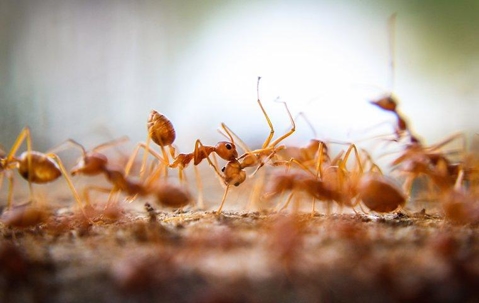
In many cases, the ants visible on the counter are only a small portion of the colony. Spraying random areas may temporarily kill worker ants while doing little to address the larger source of the problem hidden behind walls, under flooring, or outside the home.
That’s why many homeowners are now looking for lower-exposure approaches that focus on prevention, targeted treatment, and long-term control instead of simply spraying more product every time ants appear.
Start With Prevention Before Treatment
One of the biggest mistakes people make with ants is jumping straight to treatment without addressing what attracted them in the first place.
If food, moisture, and access points are still available, ants will continue returning no matter how many products are used.
Eliminate Water Sources
In Las Vegas, water is one of the biggest reasons ants move indoors.
Even small amounts of moisture can attract activity around:
- Sinks
- Bathrooms
- Pet water bowls
- Refrigerators
- Laundry areas
Leaks under sinks or around plumbing fixtures are especially common problem areas because they create hidden moisture that ants can access consistently.
Drying surfaces regularly and fixing leaks early can remove one of the main reasons ants stay inside.
Remove Easy Food Access
A few crumbs under an appliance, sticky drink residue, or unsealed pantry items can support ongoing activity for a long time.
Simple changes make a significant difference:
- Wipe down counters consistently.
- Store food in sealed containers.
- Empty trash regularly.
- Clean under appliances and pet feeding areas.
The goal is reducing the reliable food sources that allow trails to continue.
Seal Entry Points
Ants rarely appear “out of nowhere.” They are usually entering through tiny openings that homeowners never notice until activity becomes visible.
Common entry points include:
- Gaps around windows and doors.
- Cracks near baseboards.
- Utility openings.
- Small foundation cracks.
Sealing these access points helps reduce repeat invasions and supports whatever treatment method is being used.
Without that step, ant control often becomes temporary.
Safer Ways to Remove Ants Indoors
Not every ant problem requires aggressive indoor spraying. In many cases, lower-toxicity methods are more effective because they focus on disrupting the colony instead of just killing visible ants.
Bait Systems Work Better Than Constant Spraying
One of the most effective approaches for indoor ants is baiting.
Unlike sprays that kill ants immediately, bait systems allow worker ants to carry material back to the colony. This targets the larger source of the problem instead of only the ants currently visible on the counter.
This is also why spraying directly on trails can sometimes backfire. If the workers die too quickly, the colony survives and simply sends more ants later.
Targeted baiting is usually more effective and often requires less product overall.
Vinegar and Soap Solutions
For homeowners looking for a simple first step, vinegar or mild soap solutions can help disrupt ant trails.
Ants rely heavily on scent trails to guide other ants to food sources. Cleaning those trails helps interrupt the pattern and reduce visible activity.
However, this is important: Cleaning trails removes the symptom, not the colony.
That means these methods work best alongside prevention and baiting, not as standalone solutions for larger infestations.
Food-Grade Diatomaceous Earth
Food-grade diatomaceous earth is another lower-toxicity option commonly used around entry points and problem areas.
It works by damaging the outer layer of insects, eventually dehydrating them.
While many homeowners prefer it because it is lower in toxicity than broad sprays, proper use still matters. It should be applied lightly and strategically rather than heavily spread throughout the home.
A thin, targeted application is usually more effective here.
Borax-Based Ant Baits
Borax-based baits are widely used because they combine attractants with slow-acting control.
The slow action matters because it allows worker ants time to return to the colony before dying.
Even though these are commonly considered lower-exposure options, they should still be kept away from pets and children and used according to label instructions.
What NOT to Do When Treating Ants
A lot of ant problems become harder to control because of a few common DIY mistakes.
One of the biggest is spraying random household cleaners directly onto visible trails every few hours. This may kill some ants temporarily, but it rarely affects the colony itself.
Another common issue is using too many products at once. Mixing sprays, powders, traps, and homemade treatments can interfere with bait systems and make ant behavior less predictable.
Ignoring the source of the problem is another major mistake. If moisture, food access, or entry points remain unchanged, the infestation often returns quickly.
And finally, many homeowners wait too long to escalate the issue. Small trails can turn into larger infestations surprisingly fast, especially during warmer months in Southern Nevada.
When DIY Ant Control Stops Working
There is a point where ant activity stops being a small nuisance and starts becoming an ongoing household issue.
Signs that the problem may require professional treatment include:
- Ants returning repeatedly after treatment.
- Activity spreading into multiple rooms.
- Large or persistent trails.
- Multiple colony locations around the property.
At this stage, the goal is usually no longer “quick removal.” It becomes long-term control.
How Professional Pest Control Can Reduce Chemical Exposure
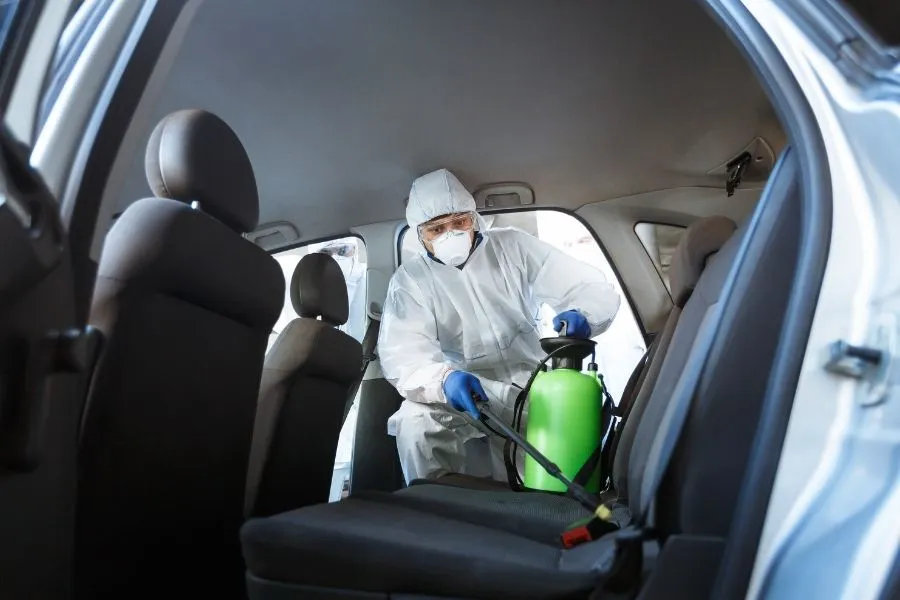
Many people assume professional pest control automatically means stronger or heavier chemical use. In reality, the opposite is often true.
Professional treatment is typically more targeted because the goal is precision, not saturation.
Instead of repeatedly spraying random areas indoors, professional pest control focuses on:
- Identifying the species.
- Locating activity patterns.
- Using targeted applications.
- Reducing conditions that support the infestation.
This approach is often part of integrated pest management (IPM), which focuses on combining prevention, monitoring, exclusion, and strategic treatment rather than relying entirely on repeated chemical application.
For many homeowners, this results in more effective control with less repeated exposure over time.
When prevention, exclusion, and focused control work together, ant problems become far easier to manage long-term.
For homeowners dealing with recurring activity, ongoing home pest control can help reduce infestations while minimizing unnecessary indoor chemical use.
If you need professional help, see our package options at Anver Pest Control.