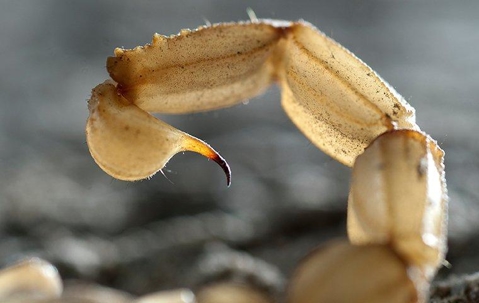
Scorpions are a familiar part of desert life in Las Vegas, and occasionally that means someone gets too close and gets stung.
A scorpion sting in Las Vegas can cause immediate pain, burning, tingling, or numbness around the sting site. Most scorpion stings in the United States can initially be managed with guidance from Poison Control, while bark scorpion stings have the potential to cause more serious symptoms that require medical care.
Knowing what to do immediately after a sting, which symptoms to monitor, and when to seek emergency care can help you respond appropriately. Once the immediate medical concern has been addressed, identifying and controlling scorpion activity around your property can help reduce the chance of another encounter.
What Does a Scorpion Sting Feel Like?
Pain is one of the most common symptoms following a scorpion sting. It may begin immediately and feel like burning or stinging. Some people experience tingling or numbness around the affected area. Slight swelling and warmth can also occur.
Symptoms vary according to the scorpion involved and the individual’s reaction to the venom.
More serious reactions can affect other parts of the body. Symptoms associated with severe scorpion envenomation can include muscle twitching or jerking, unusual movements of the head, neck, or eyes, excessive sweating or drooling, nausea and vomiting, slurred speech, difficulty swallowing, and trouble breathing. Changes in heart rate and blood pressure can also occur.
These body-wide symptoms require immediate medical attention.
What to Do Immediately After a Scorpion Sting
If you or someone else has been stung, start by moving away from the scorpion to prevent another sting.
Wash the sting site with mild soap and water. A cool compress applied to the area may help ease pain. If the sting occurred on an arm or leg, resting the affected limb in a supportive position.
Then, contact Poison Control for guidance. In the United States, you can call 1-800-222-1222 for free, confidential assistance 24 hours a day. Poison Control also provides its webPOISONCONTROL tool, which can give recommendations based on factors such as the person’s age, symptoms, and time since the sting.
Avoid applying a tourniquet. Poison Control specifically advises against tourniquet use for scorpion stings.
Your next steps should follow the guidance provided by Poison Control or a healthcare professional.
When Should You Seek Medical Help for a Scorpion Sting?
Symptoms affecting the entire body deserve prompt medical attention.
Trouble breathing is an emergency warning sign. Muscle twitching or jerking, unusual eye or head movements, difficulty swallowing, slurred speech, excessive drooling, significant restlessness, or other neurological symptoms can also indicate a serious reaction to scorpion venom.
Severe allergic reactions can occur as well. Anaphylaxis can involve symptoms such as hives and difficulty breathing and requires emergency medical care.
Call 911 immediately if the person collapses, has a seizure, has trouble breathing, or cannot be awakened.
Scorpion Stings in Children Require Extra Attention
Children can experience more serious effects from scorpion venom because of their smaller body size. Poison Control notes that serious toxicity from bark scorpion stings is most commonly seen in very young children.
Signs of a serious reaction in children can include unusual muscle or eye movements, drooling, sweating, restlessness, crying that is difficult to soothe, trouble swallowing, and breathing difficulties.
It is best to contact your local poison control center immediately when a child is stung by a scorpion. Within the United States, Poison Help can be reached at 1-800-222-1222.
Following professional guidance promptly is especially important when a young child is involved.
How to Reduce Scorpion Activity Around Your Home
Reducing hiding places can make your property less inviting to scorpions. Keep firewood and stored materials away from the house, remove unnecessary debris, and be cautious when moving objects that have been sitting undisturbed outdoors.
Poison Control also recommends wearing shoes in areas where scorpions are common and shaking out clothing, bedding, gloves, and shoes. Weather-stripping around doors and windows and repairing damaged screens can help address potential entry points into the home.
Managing other pests around the property can play a role as well. Scorpions are predators, and insects provide their food supply. A professional pest inspection can help identify pest activity, potential hiding areas, and conditions around the property that may support scorpions.
Read our blog to learn more about landscaping changes that can reduce scorpion activity on your Las Vegas property.
Regular attention to these conditions is especially useful in Southern Nevada, where scorpions are part of the local desert environment.
Professional Scorpion Control in Las Vegas
A scorpion sting puts the immediate focus on medical care. Once everyone is safe, the next question is often where the scorpion came from and whether others may be present.
Finding scorpions inside your home or repeatedly encountering them around the property can justify a professional pest inspection.
Anver Pest Control can evaluate your Las Vegas property for scorpion activity and conditions that may be contributing to their presence. Professional pest management can address scorpions along with the insects and harborage areas that help support them around residential properties.
If scorpions are becoming a recurring concern around your home, contact Anver Pest Control to schedule an inspection and discuss a scorpion-control strategy for your property.
Frequently Asked Questions
Move away from the scorpion, wash the sting site with mild soap and water, and consider applying a cool compress for pain. Contact Poison Control at 1-800-222-1222 for guidance based on the specific situation.
Common symptoms include immediate pain, burning, tingling, numbness, warmth, and slight swelling around the sting. Serious reactions can involve muscle movements, sweating, drooling, nausea, vomiting, difficulty swallowing, slurred speech, or trouble breathing.
Call 911 immediately if the person collapses, experiences a seizure, has trouble breathing, or cannot be awakened. Body-wide or neurological symptoms following a scorpion sting also require prompt medical attention.
Contact Poison Control immediately at 1-800-222-1222. Young children face a greater risk of serious symptoms from bark scorpion venom and should receive guidance promptly.
Reduce outdoor hiding areas, keep firewood and stored materials away from the home, inspect shoes and gloves before using them, maintain screens and weather-stripping, and address pest activity that provides scorpions with food. Professional pest control can also evaluate the property and develop a strategy for recurring scorpion activity.