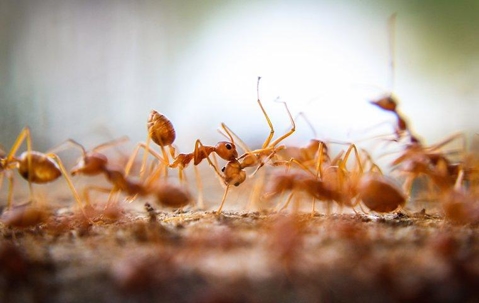
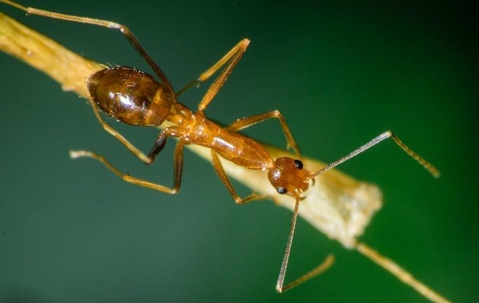
Repair needed from carpenter ants climbs into the hundreds of millions annually across the U.S., and termite infestations inflict more than five billion dollars worth of damage. In Southern Nevada, warm temperatures and increased urban moisture from irrigation and landscaping create ideal conditions for both dry-wood termites and carpenter ant colonies to gain a foothold.
Both pests are serious wood-destroying insects in the Las Vegas valley, and the difference between carpenter ants and termites is critical, because the correct treatment varies drastically. Misidentification can lead to wasted money, missed infestations, and ongoing structural damage inside your home.
Comparison Overview
If you need to tell carpenter ants from termites fast, review these distinguishing factors.
Carpenter Ants
- Pinched, hourglass waist
- Elbowed or bent antennae
- Two different wing sizes (front wings longer)
- Black, red, or a combination of both
- Larger workers: 1/4–1/2 inch
- Smooth, clean wood galleries with no soil
- Coarse sawdust-like frass
- Primarily active at night
Termites
- Straight, thick waist
- Straight, beaded antennae
- All four wings identical in size and shape
- Pale white to light brown color
- Workers typically 1/4–3/8 inch
- Mud-packed galleries with soil and debris
- Tiny, uniform pellet droppings
- Active 24/7, continuously feeding
Quick rule:
A pale, soft-bodied insect with a thick waist = termite.
A dark, segmented ant with a skinny waist = carpenter ant.
Like any other pest, the difference between these pests is subtle but critical to deciding treatment options.
Wing Differences (Swarmers)
Swarming season in Las Vegas usually takes place between March and May, when reproductive insects, known as swarmers, leave their existing colonies to establish new ones. These flying ants and termites are often mistaken for one another, but subtle differences in their wings can help you tell them apart.
Carpenter ant swarmers have two different wing sizes: the front pair is noticeably longer than the rear pair. Their wings are often darker or slightly tinted and extend beyond the length of their bodies. After mating, they shed these wings, which can sometimes be found in small piles near entry points or light sources. Carpenter ants in Southern Nevada typically swarm in late March through April.
Termite swarmers have four wings that are all the same length, with a milky-white or grayish appearance. They are frequently spotted near windows, vents, or light fixtures, especially during their peak activity from February through May, which generally occurs slightly earlier than carpenter ants.
A quick rule of thumb: If the wing sizes differ, you’re looking at carpenter ants. If they match perfectly, it’s termites. In either case, piles of discarded wings inside your home signal that a colony may have moved in, and it’s time to call a pest professional.
Wood Damage and Frass Comparison
Understanding how carpenter ants and termites damage wood is one of the easiest ways to tell them apart. Both pests can compromise your home’s structure, but their methods and the signs they leave behind are very different.
Carpenter Ant Damage
Carpenter ants don’t eat wood; they excavate it to form smooth galleries for nesting. Their tunnels appear polished and follow the natural grain of the wood, with no dirt or mud inside the voids. You might hear faint rustling sounds at night within walls or find coarse sawdust-like frass beneath small openings. These piles of debris often contain wood fragments and dead ant parts, confirming the activity of carpenter ants rather than termites.
Damage is usually slow to progress, often taking several years to become serious. Common trouble spots include window and door frames, fascia boards, siding, and areas with high moisture, such as bathrooms or kitchens. When tapped, affected wood may sound hollow, another clue that carpenter ants have been excavating inside.
Termite Damage
Termites, in contrast, actually consume wood, feeding on cellulose within it. Their tunnels are typically mud-packed and irregular, cutting across wood grain rather than following it. Other visible signs include mud tubes along foundation walls, blistered paint, or warped floors as the wood deteriorates.
Termite damage develops far more quickly than carpenter ant damage. Severe structural issues can occur within six to twenty-four months of infestation.
Frass: The Simplest Identifier
The material each pest leaves behind offers an easy clue. Carpenter ant frass looks like coarse sawdust, often piled beneath damaged wood. Termite droppings, particularly from drywood termites, appear as tiny, six-sided pellets resembling salt, coffee grounds, or fine sand. You might spot these pellets near exit holes, windowsills, or baseboards.
In short:
- Carpenter ants are excavators, leaving behind shredded wood debris.
- Termites are consumers, producing neat, sand-like pellets and causing faster, more destructive damage.
Recognizing these differences early can make all the difference in protecting your home’s structure and catching infestations before they spread.
Behavior & Habitat Differences
Carpenter ants and termites may both damage wood, but their habits and nesting preferences differ, especially in Las Vegas’s dry climate.
Carpenter ants are night-active foragers that feed on sweets, proteins, and honeydew. They don’t eat wood but nest in softened or water-damaged areas, often building multiple colonies inside walls or attics. Around homes, they’re drawn to moist spots such as pool areas, plumbing leaks, and over-watered landscaping.
Termites are constant feeders, consuming wood 24/7. A single colony may hold over a million insects, all working in darkness. They avoid light, travel through mud tubes or wood, and must stay moist, except for drywood termites, which survive without soil contact.
Las Vegas Climate Influence
The arid climate favors drywood termites, while irrigation and landscaping promote subterranean termite activity. Meanwhile, carpenter ants thrive where moisture collects, making water control one of the best defenses for local homeowners.
How to Inspect Your Las Vegas Home
Step-by-Step DIY Inspection
Exterior
- Look for mud tubes along the foundation.
- Inspect wood that touches soil.
- Check eaves, fascia, and siding.
- Look for frass below wood joints.
- Check irrigation areas carefully.
Interior
- Tap walls & beams for hollow sound.
- Look under sinks & bathroom tile.
- Use a flashlight in any crawl spaces.
- Search for discarded wings near light sources.
Document
- Photos and notes help diagnose quickly.
- Capture specimens if possible.
Prevention Strategies for Las Vegas Homes
Moisture Management
- Fix leaks ASAP.
- Keep soil sloping away from the foundation.
- Maintain AC/ventilation.
- Repair roof damage quickly.
Wood & Structure Care
- Ensure 6” clearance between soil & wood.
- Store firewood at least 20 ft away, elevated.
- Remove stumps & buried wood.
- Replace water-damaged boards.
Landscaping Practices
- Keep mulch at least 12 inches away from the foundation.
- Don’t over-water near your home perimeter.
- Trim shrubs so they don’t touch siding.
How to Treat Termites versus Carpenter Ants
Although carpenter ants and termites both damage wood, their control methods are entirely different and should never be treated the same way.
Carpenter Ant Treatment
Anver Pest Control provides effective solutions for carpenter ant infestations through targeted baiting systems, exterior barrier applications, and dust treatments injected into wall voids. In addition to direct control, technicians address moisture and nesting sources to prevent colonies from returning. Most carpenter ant infestations can be fully eliminated within two to four weeks when these methods are combined.
Termite Situations
Termite treatment is far more complex and requires a state-licensed termite specialist, as it involves soil trenching, drilling, wood treatment, baiting systems, and sometimes full fumigation for drywood species. Because these materials and procedures are regulated, termite work must be handled by a licensed termite professional, not a general pest control provider.
Using carpenter ant products or techniques on termites will not be effective and can allow infestations to spread unseen. When wood damage is confirmed but the pest type is unclear, a professional inspection is the safest first step.
Next Steps
Both carpenter ants and termites are destructive insects, but their appearance and wood damage patterns differ dramatically. Termites can compromise major structural components much faster, while carpenter ants typically spread from moisture-damaged areas over time.
If you aren’t sure which pest you have, a professional identification can prevent expensive mistakes — and the inspection is fast. If you suspect carpenter ants, Anver Pest Control has the right treatment plan for you.