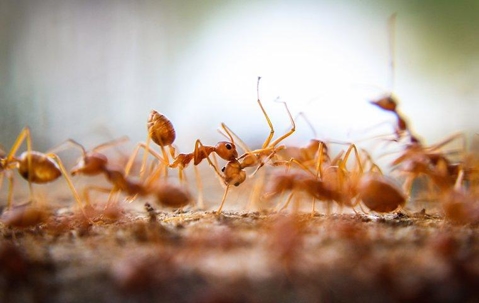
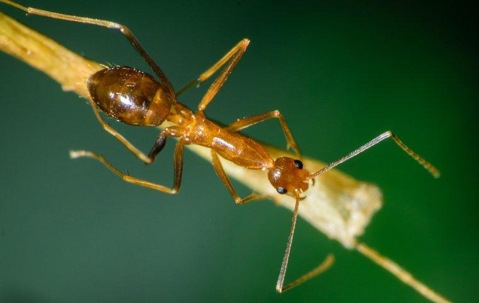
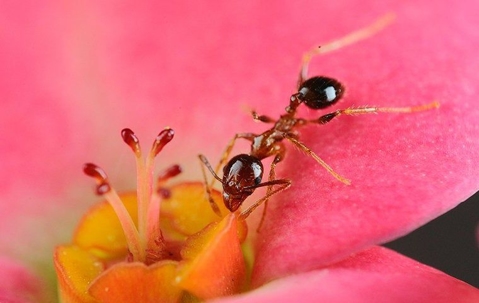
If you’re searching for ant control in Las Vegas, there’s a good chance you’re dealing with Argentine ants (Linepithema humile). They’re one of the most persistent invaders in Southern Nevada neighborhoods, especially around irrigated landscaping and newer subdivisions.
Their high volume, colony formation, nesting patterns, and treatment response make them particularly tough to deal with.
Meet the Argentine Ant (and why they’re hard to beat)
Argentine ants form massive “supercolonies” with multiple queens that cooperate rather than compete, allowing the population to expand quickly and rebound after partial treatments. Workers lay heavy pheromone trails and coordinate foraging in waves, which is why you’ll often see orderly trails radiating from mulch beds, wall gaps, or irrigation lines straight to your kitchen. In Las Vegas, they’re a major household and garden pest, common in yards and structures across the valley.
Key Identification Notes
- Small (about 1/8″), uniform brown to dark brown
- Large trails; often reappear after “contact” sprays
- Cooperative behavior across colonies (supercolony trait)
Why Desert Homes Attract Them
Even in our arid climate, yards create cool, damp micro-habitats where Argentine ants thrive. Common attractors include:
- Drip irrigation and leaky hose bibs. Constant moisture under emitters, valve boxes, and along foundation lines builds ideal nesting pockets.
- Ground cover and dense plantings. Assorted ground coverings and shaded root zones hold humidity; ants use these as nesting corridors into walls and slab gaps. During hot spells or heavy rains, they move indoors for shelter and food.
- Planter beds against exterior walls. Soil contact at the foundation, plus frequent watering, allows easy access into weep holes, utility penetrations, and slab cracks.
- Exterior features. Expansion joints, conduit penetrations, irrigation passthroughs, AC lines, and door thresholds provide hidden entry points.
Homeowner takeaway: In the Vegas desert, water is the magnet. Any feature that keeps soil or structural gaps even slightly damp becomes a runway for Argentine ants.
Argentine ants love sweets and proteins. Crumbs, pet food, and residue in recycling bins can retrigger trails even after a good service. Pair your professional plan with simple rules:
- Containerize pantry goods.
- Rinse food containers before binning.
- Feed pets on a tray you can quickly wash.
Then let the bait do the colony-level work.
Learn more about what to do about ants that keep showing up in your kitchen.
Why Many DIY Treatments Fail
Standard “kill-on-contact” sprays knock down visible foragers, but that’s only a small fraction of the colony. Worse, fast-acting surface treatments can trigger budding (colony splitting), sending queens to new nest sites and multiplying your problem.
Using a bait-first strategy for Argentine ants is recommended, aimed at the colony, not just the trail you see.
Better Strategy: Targeted Baiting + Habitat Fixes
- Use the right bait at the right time. Argentine ants switch between sugar and protein needs; low-concentration sweet borate baits are broadly attractive, while protein-based baits can be critical in spring brood cycles.
- Place baits outdoors near trails and nest zones. This draws ants out and limits indoor recruitment. Refill/replace as directed.
- Modify habitat. Reduce irrigation frequency, fix leaks, thin dense plantings, and pull ground cover back from the foundation to break moisture bridges.
- Seal entry points. Caulk cracks, weather-strip doors, screen weep holes with breathable materials, and foam around utility lines. These are essentials in any successful ant control program.
Seasonality in the Valley
Expect activity to spike with temperature swings and rainfall. Hot spells and monsoon events often push outdoor colonies inside, especially when irrigation schedules stay high and landscape soils remain damp. Plan proactive exterior baiting and inspections in late spring through early summer so colonies are suppressed before peak season.
Attention, New Home Buyers in Las Vegas
Buying new construction or a recent build in the valley? Add ant prevention to your punch list.
Pre-close Checklist
- Inspect moisture sources. Ask your inspector to check irrigation for leaks, over-watering, and emitter placement next to stucco or slab. Look at valve boxes, hose bibs, and AC condensate lines.
- Review landscaping design. Planter beds right against exterior walls and frequent watering create ant superhighways. Consider a gravel break between beds and the foundation, and keep other ground cover pulled back.
- Ask about pest history and service records. If the home had ongoing ant issues, trails and entry points may already be established.

About Warranties
- Builder coverage typically focuses on termites, not ants. Many new homes receive a termite pre-treat and a transferable termite warranty; that’s different from ongoing general pest coverage. Don’t assume your builder warranty includes ant control.
- Home warranties and service plans vary. Some local providers offer service warranties that cover retreatment between scheduled visits for listed pests; others sell add-on pest plans. Read the fine print on covered pests, retreat windows, and exclusions.
Smart move for buyers: Set up a preventative pest program during your first 30 days. Establish exterior baiting and monitoring before colonies fully map your yard’s moisture pattern. That’s especially important in HOA communities with high irrigation schedules and dense front-yard plantings.
Next Steps for Ant Control
Argentine ants are beatable, but not by chasing trails with contact sprays. Success in ant control in Las Vegas hinges on understanding the species, cutting the moisture and habitat that fuel them, and deploying seasonally appropriate baits where colonies live and forage. For new homeowners, tackling these steps early, along with clear expectations about what builder and home warranties do or don’t include, prevents small trails from becoming nonstop invasions.
Anver Pest Control specializes in ant programs built for Las Vegas homes: correct ID, exterior baiting, moisture/habitat fixes, and follow-ups that keep populations down for the long haul. Pick your plan and protect your home today.